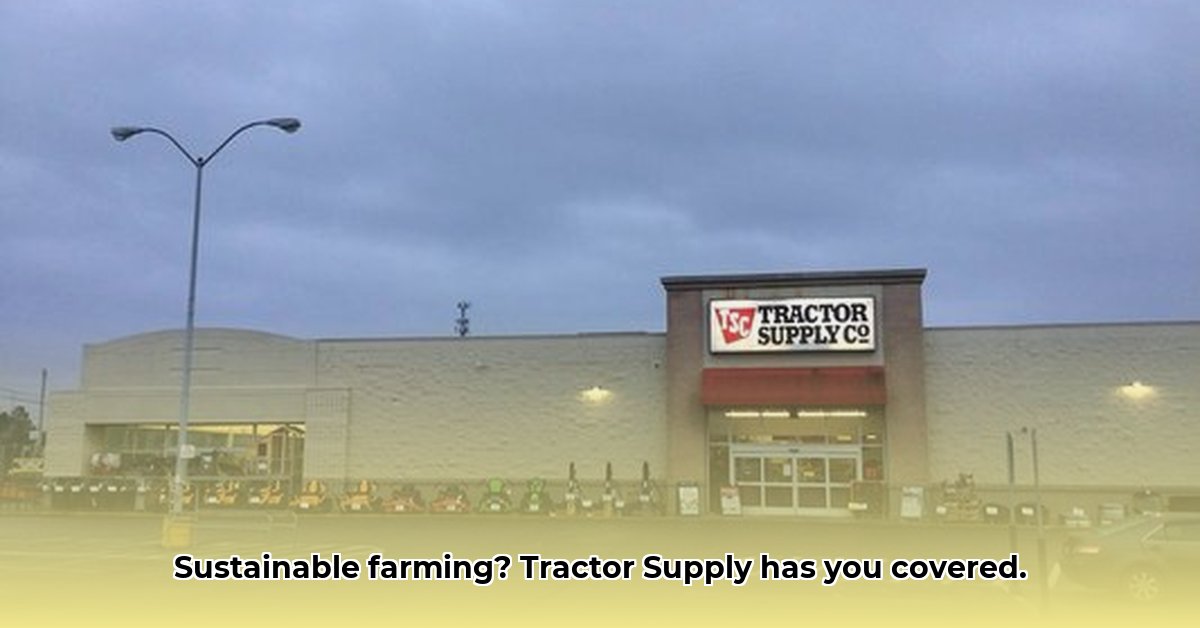
Finding the right supplies for your farm while also prioritizing sustainable practices can be challenging. Tractor Supply Company (TSC) in Bessemer, Alabama, offers a convenient location for many farmers, but how well does its product selection align with sustainable agriculture? This guide explores TSC's role in helping Bessemer farmers adopt more environmentally friendly methods. For durable and sustainable planters, check out these galvanized options.
Tractor Supply Bessemer AL: A Sustainable Farming Resource?
Tractor Supply's convenient Bessemer location offers significant advantages for local farmers. Reduced travel time translates directly to lower fuel consumption and decreased carbon emissions—a key element in sustainable farming. This accessibility is especially beneficial for smaller farms with limited resources.
However, convenience alone doesn't guarantee sustainability. A thorough assessment requires examining the specific products TSC offers and their environmental impact.
Sustainable Supplies at Tractor Supply: What's Available?
While TSC doesn't have a dedicated "eco-friendly" section, many products indirectly support sustainable agriculture. Efficient irrigation systems for better water management, pest control solutions that minimize harmful chemicals, and tools made from recycled materials all contribute to environmentally sound farming.
The challenge lies in the limited information available. TSC, like many retailers, often lacks detailed sustainability information on its products. This lack of transparency hinders informed decision-making for farmers committed to eco-conscious choices. Knowing the origin of materials and the overall environmental impact is crucial but isn't always readily available at TSC.
Addressing the Information Gap: Key Questions to Ask
To fully evaluate TSC's contribution to sustainable farming, we need more transparency. Farmers need readily available information about:
- Supply Chain Transparency: Where are products sourced? What's the environmental impact of production and transport?
- Product Lifecycles: How long do products last? Are they recyclable or reusable?
- Environmental Certifications: Do any TSC products or suppliers hold certifications like those from the USDA Organic program?
The absence of this information forces farmers to rely on their own limited research, making informed, sustainable choices more difficult.
Actionable Steps for Sustainable Farming at Tractor Supply
Farmers can proactively promote sustainable practices by:
- Investigating Products: Carefully examine product details. Look for indicators of sustainability, such as materials used and manufacturing processes. Consider whether a tool could be made from more sustainable materials, such as recycled steel.
- Engaging with TSC Staff: Ask questions about sourcing, product lifespans, and environmental impact. Even limited information fosters a dialogue that can create change.
- Advocating for Change: Let TSC know that sustainable products are important to you. Expressing consumer demand drives market changes.
How Tractor Supply Can Further Support Sustainable Agriculture
TSC can significantly enhance its contribution to sustainable agriculture by:
- Improving Transparency: Publish detailed information on product sustainability, including supply chain specifics and environmental impact data, on its website and in-store materials.
- Community Engagement: Partner with local farmers and agricultural organizations to understand their needs and preferences regarding sustainable products.
- Expanding Sustainable Offerings: Actively source and stock a broader range of products that directly support sustainable practices, such as organic seeds and biopesticides.
A Collaborative Vision: Building a Sustainable Future
Transitioning to sustainable agriculture requires a joint effort. Farmers need readily available solutions, and retailers, like TSC, play a vital role. By collaboratively working together, we can foster a more sustainable future for the Bessemer farming community and beyond.